'Consumer Culture Combat--- ' (Occasional blog)
Home-steading, 'frugal-style', on the (free) range----
'Consumer culture - can consume people - ? ----- ' (Anon)
Micro-holding report ----
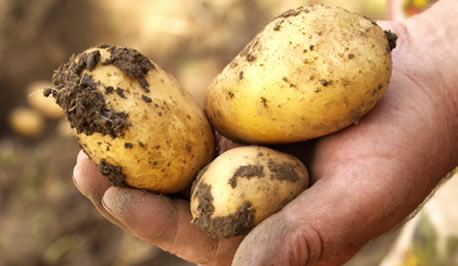
Now it's mid September at the organic eco micro-holding (small smallholding) in the UK midland region, after weeks, months of hot weather and now good levels of restorative rainfall - in the 45 years of operation there's never had to have been so much irrigation on as this growing season. It's a beautiful black loam soil here in the organic veg growing area, probably due to it having been a cottage garden for a couple of hundred years or so, and easy to work, but its downside is that as it's a 'light' soil', it doesn't hold moisture well, unlike 'heavier' soils, that is with clay content, then more suited to raised bed operation , not then needing quite so much watering, although maybe so in these exeptionally long and prolonged hot conditions ---? The broad bean crop was quite prolific, quite a few now in the freezer, and the potato crop seems to be 'passable', now being dug, hardened off for a day or two in the sun, then bagged in paper bags for storage and then winter use
Peas have been a problem, the first three rows not bothering to make an appearance, with just one later row in evidence, and the onion crop from sets ('baby onions') has been poor in spite of the irrigation (there's been surprisingly no restriction on water use in this area), the later onion crop from seed also struggling. On the plus side, and forgetting the frugal-style for awhile, the strawberry and rspberry crops were prolific, both fruits being picked for all the month of June - never imagined a body could get start to get fed up of strawberries ------ Runner beans are now plentiful, as are the tomatoes, the outside tomatoes unusually just beating those in the two glasshouses to ripen ----and damsons and apples ready from the orchard.
Sawing sessions have continued in spite of the hot weather, with the wood store in the open-fronted 'logs-istic' centre looking satisfyingly full-ish - energy security that can be pyhsically felt, and economic too as no wood has had to be bought this year, (back to frugal-style --- ), it's all been sawn up from wood from existing wood piles on the place. It's been good weather too, to employ the brand new electric bike to travel the five miles down to the handy local small town - 1.5 miles down to the next village, maybe one motor encountered, then onto the old rail track for three miles, just a couple of dog walkers to negotiate, over a quite busy main road pushing the bike, then hopping on it again to do the last half mile down a restricted access (for motors) road, generally then no traffic met, to the shopping/main street area -couldn't really get much of a quieter journey, with gorgeous countryside too.
Frugal transport ----
It's quite a robust touring sort of a pushbike, with then battery and electric motor added, which doesn't make it as expensive as some of the more specialist electric bikes, (and lighter) and equipped with three power modes, the highest giving the bike a considerable power boost, but still probably the cheapest form of powered travel (in the world ----?!) ('fully frugal'---), as here it's charged up for free courtesy of the solar panels. Motorised transport with no running costs - no road tax, no vehicle insurance, no emissions and no fuel costs - can't be bad, 'beating the system'----'mighty frugal'. Ideal too for urban transport, although maybe the considerably heavier traffic could be a problem area - ?
'Quantity of life v. quality of life ------ '
Ticket prices for events here in the UK have soared, as the quote below wherein a family would have had to pay around £700 to watch a day of the recent European athletics championships illustrates, and a former England cricket captain is lamenting the greed of the cricket authorities in today's paper - apparently it will cost a person aroung £250 to watch a day's test match cricket next summer. The current cultural theme seems to centre around the 'quantity of life' where quite a bit of money is needed to live a 'richly-lead'' life. Such 'money pressurisation' in a culture continues and amplifies John Cleese's (UK comic actor) comment that 'money's spoilt everthing', with one of the potential casualties of such cultures being that any non-monetary 'quality of life' aspects then get shorter shrift - ? Another effect of heavily moneytised cultures must surely be that the culture becomes 'all encompassing', with then less emphasis on ,say, social community/family aspects, individual independence, or 'Maslow-type' individual 'fuller development' - money then being a limited dimension, 'superficail' type of medium - ??
'Making society work --- ?'
This piece aims to look then at the aspect of the ('freerange') individual fighting back' against a 'largist' 'big beast', 'big is best' 'heavily moneytised system' which can often seem to work against so-called 'ordinary folk', now apparently 'kindly' labelled 'normo's' - perhaps society in general needs to be more aware and respectful of the fact that it's reported that the 'normo's' contribute 90% of the UK's finances, (and some big corporate outfits reportedly not contributing their fair whack) and that without this and the work contribution from this valuable group of citizens, this society would quickly grind to a halt. Not everyone is in thrall to wealth, power and fame - there could well be a considerable portion of citizens who choose and practice aspects such as 'good living', 'sociability', community, social contribution, well-being, creative practice and so on, even, 'frugal living' --- , 'multi-dimensional' souls. -----
The 'having' life living route maybe prominent in today's western-style society, but the internet reveals that a considerable 'being' living style exists, and paper reports indicate that here in the UK not only a big maiority (over 80%) value (personal) spiritual aspects to their lives ---- , but also that the younger generations, eg. generation z, are also getting more into (personal') spirituality ------
'before enlightenment, draw water, chop wood, after enlightenment, draw water, chop wood --- ' said an eastern sage --- .
'man is a social animal, living in societies --- ' (anon)
'Freerange fight-back ----'
The first section looks at the general picture and particularly why folk can be disadvantaged in the modern-type cultures. Then, and using example aspects from the 'frugal, lean, eco living' style on the micro-holding here, some practical measures to 'fight back' against pervasive and 'largist' mainstream cultures are suggested, along with a few ideas designed to help 'bolster' individual inner strength..
The way life's lived these days means that the consumer culture can loom large in peoples' lives. Just as a quick modern example -all the considerable number of new houses built recently in the local small market town have no chimneys, no solar panels, and tiny gardens, so scope for any home life existential support activity is virtually nil. People are committed to for instance a certain fuel type all mainly supplied by pretty large organisations, and have to buy all food supplies in, again from generally large outfits - the oligopoly (few large suppliers) of the few large supermarkets reportedly supplying 95% of the national food supply. Then of course there's the considerable level of bombardment of commercial messages via the various national media sources, all of which no doubt contributed to Erich Fromm's comment :
'In the end, such a ('consumer culture') civilisation can only produce a mass man, incapable of choice ---- increasingly less self-responsible.'
Erich Fromm, (The Sane Society (book))
Can folk escape such a fate, given the sheer weight of all the modern 'consumer culture' everyday pressures - ? And, of course, escape the fate of being exploited, as is for example appearing to be the case with the holders of leasehold property in the UK, initially attractive due to lower initial costs, but then being trapped by seemingly ever increasing charges -as an example a relatively small leasehold retirement flat reportedly can attract high service charges of a thousand pounds per month or more, then often leaving the property unsalable ---- It may certainly take a certain level of awareness and a level of personal application to be able to resist such nigh on overwhelming forces, a mission freerangers could well be acquainted with --- It used to be said that TV was the 'opium of the masses', but now joined by 'financial seduction' - ?
Of course the 'mainstream' culture is pretty huge, and how can a small organism such as a 'micro' individual 'know better' - ? Against this, the mainstream here in the UK doesn't seem to be doing over well at present, with amongst quite a variety of problem areas, which often seem to pan out as the national, now privatised, sectors - wherein money making again has appeared to overtaken 'providing a national service' as the main priority - ? From several angles and particulary the strategic point of view, it surely has to be debatable as to whether national assets and services should be privatised in the first place - ? Taken too over time, how many mainstream cultures have proven not to have stood the test of time - quite a few, so any assumption that mainsteam culture, just because it's big, is infallible, can be off the mark -----
(The section following reviews ('non-exhaustive') example 'preservation' measures, which may help, from both a practical angle but also from the 'personal internal strength' point of view, and which can be viewed as example 'fight back' strategies individuals can employ, hopefully to useful effect --- )
Reducing living costs -------
> Avoiding high-cost 'trendy' outlets - using sales ., for instance--- where cheaper (care still needed -- ) products can be found. 2) Only buying the minimum needed -a small example from here at the micro--holding occurred last year when the wide-headed grass rake's head fell apart. New grass rakes were identified, generally costing £30 plus. Then just the rake's head was located on the net, which proved to be a good product, and at the much-reduced cost of just under £7, no delivery charge. The wooden stale (handle) from the old rake was then fitted to the new head -result, new rake. (immersing rake head and top of wooden stale in water for several hours gives a tight fit).
3) collective purchasing - a community based on a farm (independent living units, collective use of farm's resources) was able to qualify as a 'cooperative' to then be able to buy domestic products (including food) at wholesale (significantly cheaper) prices. 4) The semi self-sufficient system here at the eco micro-holding includes growing own organic food (cheaper - no chemical coste, using lower cost stategies such as buying cheaper seeds (than, say, garden centres), making own organic cost-free fertilisers (eg.s compost, nettle juice), saving home-grown veg seeds (particularly expensive bean and pea seed), using pea/bean stick supports from the site, growing veg patterns to ensure fresh veg always available for picking, preserving some produce (eg. peas and broad beans) for winter consumption ----
> Sorting energy costs. Having one main fuel and ('non frugal') 'whole house' central heating can mean high annual energy costs - the average yearly energy cost for a 3 bedroom abode in the UK is now just inder£2k per year (shortly due to rise), (energy costs increased in the UK some 18 months ago by 100% - in France the increase was limited to 4%, their energy industry being mainly state run.) > Example 'combat' strategies : 'alternative' living styles eg. canal narrow boat living -yrly heating costs (via solid-fuel stove) quoted on TV as £250/yr, (maybe now higher?, but still only £500/yr if 100% higher)) : 'mix and match' strategy, avoiding relying on one fuel source,, eg. many have installed wood/multi fuel stoves. Here at the micro-holding, using additional heat devices eg.s small cheap halogen electric heaters, portable gas heaters and the like, along with a'just living space' heating policy (i.e not whole house) has significantly reduced the yearly heating bill.
Micro-holding experience : Solar panels were fitted here at the cottage some time ago, with then the addition of a small air-source heat pump (£1400 when fitted) with the ability to heat two rooms, approx 35 sq metres and taking only 0.5 kilowatts of electric to run it, very economic (frugal) but then giving out 2+kw of heat. A bonus then being that on even not particularly bright days in winter the two day living rooms of the cottage are being adequtely heated 'for free' via home -produced solar energy - tres 'frugal')).
The cottage has the benefit of a multi-fuel stove and quite a lot of wood has been sourced for free, plus the solar panels, with the effect that over the last few years the yearly energy bill here at the micro-holding has run at around 35% of the averge cost level. (a device also fitted to the solar system at relatively cheap cost to use unused solar electricity in the day to provode free hot water (needs a hot water tank system)). Making use of 'fuel opportunities' (eg. a few years ago people were busy installing oil central heating systems in this area (no mains gas in country areas), and so wood, being 'out of fashion', was freely available for the collection i.e. free, resulting in four 'sizable' reserve fuel piles being establisher here).
> sorting transport costs - alternative transport means : walking, biking, 1 horse/pony power carts, electric biking, subsdised public transport. Motor purchase - avoiding interest-heavy expensive car leasing schemes -using car auctions, pre-owned older low mileage motors, sharing a motor. Example micro-holding low-cost : A 3 yr old 'utility useful' 'basic' van/car with low mileage (25k), £20/yr low car tax (low emission 1.3 diesel engine), 60 m.p.g, £5k dealer cost, £1.5 deposit, £3.5k 3 yr bank loan at 5%, £105 mthly payment (approx £170 mth lower than av leasing payment), own vehicle after 3 yrs. (12 yr 'working' life expectation). Avoiding high battery replacement costs for electric cars .
> housing/similar. Housing purchase or renting costs are high here in the UK. Ways of limiting costs could be: house/flat sharing, avoiding leaseholds, mobile home living, van/ motorhome living, converted bus living, canal boat living, communal purchasing property eg small farm, work with accomodation provided, eg.s farmwork, cruise ship work, 'domestic' work (eg.s cook, nannys, chauffeur, gardener), hotel work, pet/holiday sitting work. . Re-locating to cheaper areas, areas with vacant properties (squatting, occupying - more relevant now with 'remore working' patterns - ?) ).
> 'Other' : Accessing pre-owned tools, furniture etc cheaply via auction sales, E-bay, Utilising charity shop buying, example working and other clothing, furniture, TV's. Outings : the paper outlined yesterday that a day for a family of four watching the European athletics championships in Birmingham (UK) recently would have involved a likely outlay of £700, a considerable sum. Back along in the UK say in the 1950's, children often had to make their own leisure time activities such as playing ball games, 'adventure' hikes, making dens and the like, whereas in modern times what with childcare costs and the need for more organised outings, children costs are higher - opt for low cost nature-based activities - ? (sea-side, country walks, biking, nature reserves, small boat sailing, rafting, climbing, low-cost constructions (eg. from recyclable materials ---- )
> Work : Getting technical qualifications eg.s electrician, plumber, to avoid 100% dependence on employment, 'portfolio' work life - several strands. Remote working, relief work (eg. milking cows, security, house/pet sitting), cruise ships, armed forces eg. navy, diy handyman work, painting/decorating, widow cleaning ----'side hustles' eg.s growing/plants, dog walking, market stall, micro-holding ----- authoring, actors 'extra'.
'Mainstream culture change needed - ?'
The 'lowered outlay' policy is certainly helpful in terms of reducing living costs, and in making a fixed income go further. There can be a curious sort of satisfaction in 'beating/semi-beating the system', especially when it's felt that the sytem is 'loaded against' , which could well be the case here in the UK, the 'movers and shakers' having had it pretty good the last few years - big salaries, big bonuses, strong focus on 'big wealth' making and the like. It can help too to 'bolster' personal internal strength, something that quite a few authors have suggested has been on the wane, given the number of very large organisations that an individual comes up against these days.
Wealth groups have beeb busy taking over services and charging higher fees (eg. here in UK many vet practices now owned by such investment groups, apparently charging nearly 17% higher fees than independent vets) , and coinciding with a mainstream moving away from 'public service' focus to the 'self-gain' focus----- seemingly resulting in considerable increases in crime - fraud, scamming, robbing, and 'on the make' business practice ('legalised' robbing'?)--- . Maybe it's not too surprising that public trust here in the UK, is at a low level, with apparently quite a few here holding the view that the UK is a 'broken' society -----
Trends such as the rise of 'gated communities' probably illustrate the fall in community values that some, again maybe quite a few, might feel has been a trend, probably hand-in hand with the rise of a strong 'out-for-self' focus. Might there need to be a change of direction with community focus needing to become more prominent - ? In the meantime, it could be useful to follow the clarion call of the elderly French gentleman, writing back along in his famous pamphlet, entitled 'Indignez-vous, indignez-vous!' --------

Comments
0 responses so far ↓
There are no comments yet...Kick things off by filling out the form below.
Leave a Comment